转载:THE TRANSITION FROM PHYSICAL, TO CORONA, TO OCTANE, TO REDSHIFT

来自我非常喜欢的设计师The French Monkey的博文,讲述了他对不同c4d渲染器的使用感受
Today, I wanted to share with you some of my personal insights and decisions I had to do over the years when it comes to working with third party renderers in Cinema 4D. How I got into using different renderers and the organic transitions I personally had while switching.
My goal here, is not to emphasize the use of a particular render engine, nor to criticize another, but just to share my reasoning behind my needs and workflow habits.
I started working with Cinema 4D about 4 years ago now, back then, the standard and physical renderer were kind of the way to go for most of us, since third party renderers were not really adopted or implemented as they should for a stable workflow in Cinema. Even tho V-ray has always been a must have renderer option for Archviz artists, it was still all CPU based and slow for must of us, and personally for me, working with an intel 4 core without hyper-threading.
Physical Renderer
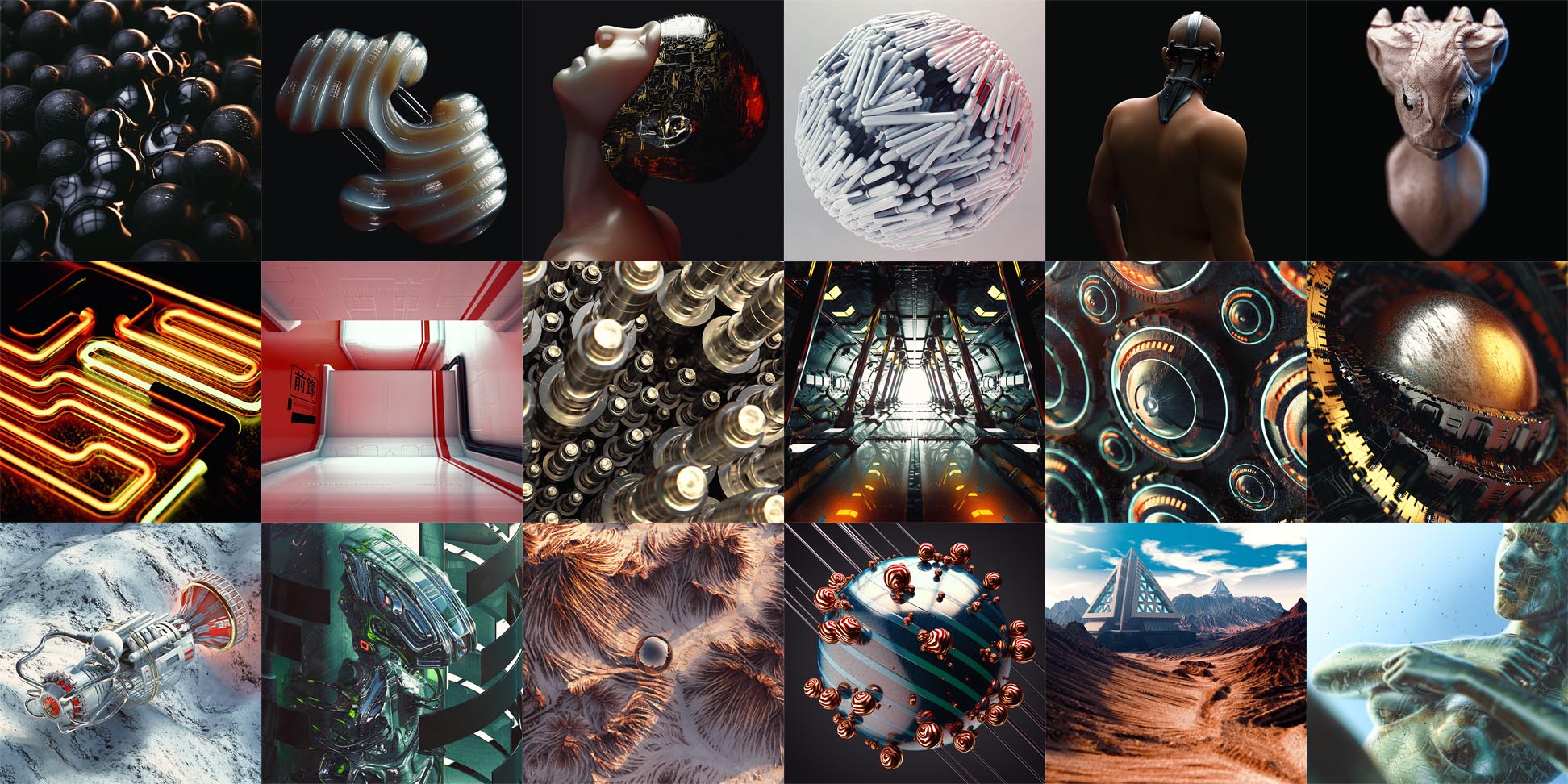
Working with the Physical Renderer has always been a frustration for me, due to the slow feedback and the amount of test renders I had to send in the render view just to preview the smallest change in my scenes.
I never really questioned this render engine, because it was working out of the box and doing pretty much everything, and to be honest, it was the only render engine I knew back then.
Despite my slow running machine, I ended up doing around 340 projects using the physical render engine, all part of my Everydays project I started in 2016. Apart from uploading the C4D project files on the site, I was also posting a screenshot of my final render time, just to share my waiting frustration with the community downloading my files.
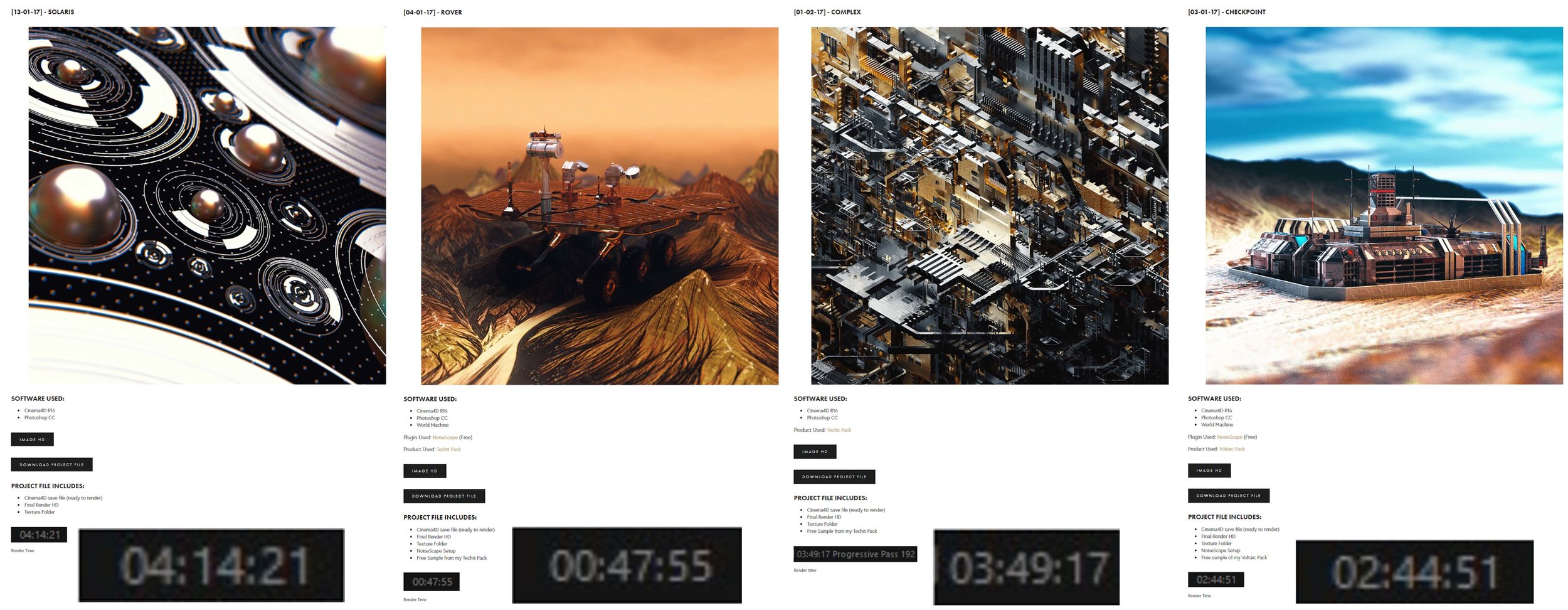
At this point I knew, I had to find a faster render solution to try on.
Corona Renderer
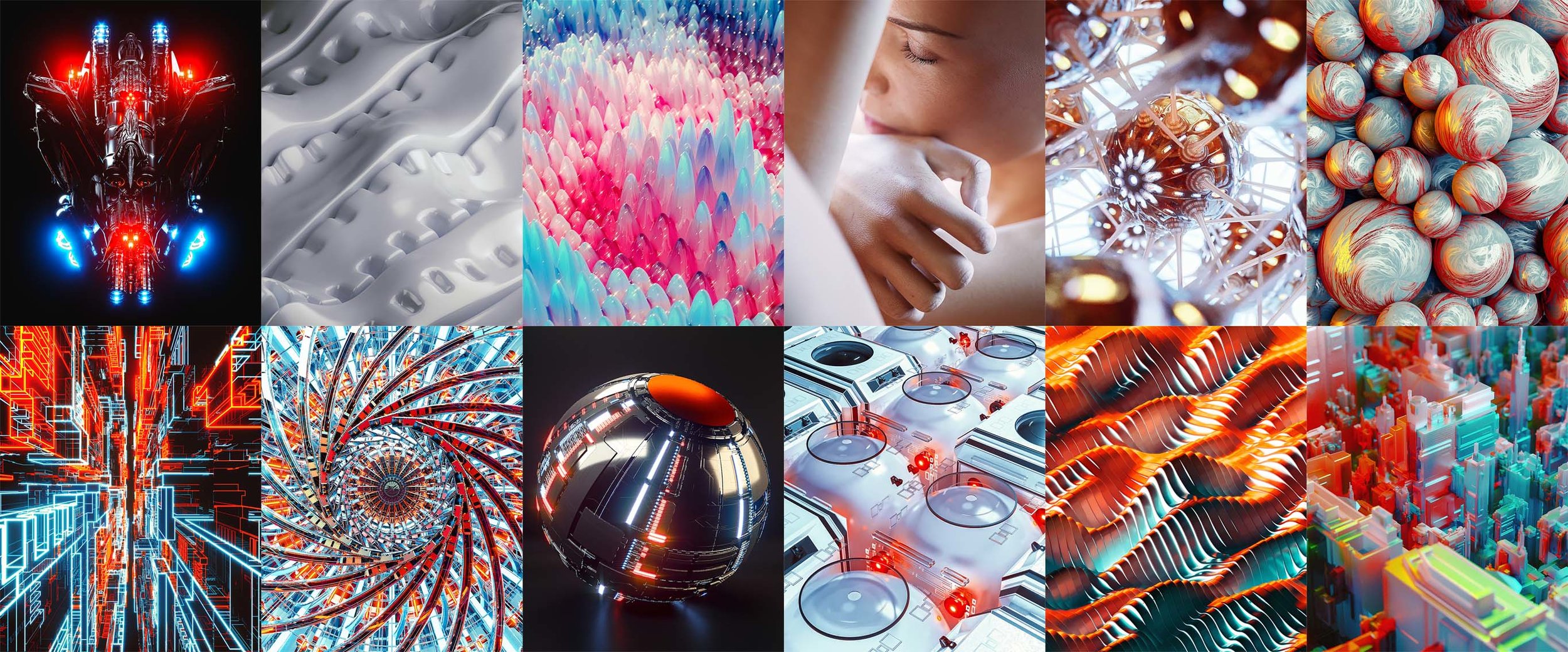
I first heard about the integration of Corona render engine (beta) in Cinema 4D around 2017, it was still at its early stages but very promising, and free to use. After playing around with it for a couple days, I realized it was faster than the Physical renderer with better overall controls of the Image editor, with options like Flare, color correction and other camera settings, very easy to just play around with. Even tho it was still CPU based with no node editors, it was the switch I was looking for at that time for faster results, without having to upgrade my workstation.
Nowadays Corona have had a significant overhaul, with his node based system and it’s denoiser (GPU accelerated). I haven’t had the chance to play around the new update, but it’s a render engine I definitely loved and would use again at some point. I ended up doing 35 projects using Corona before switching again onto another render engines.
Octane Renderer
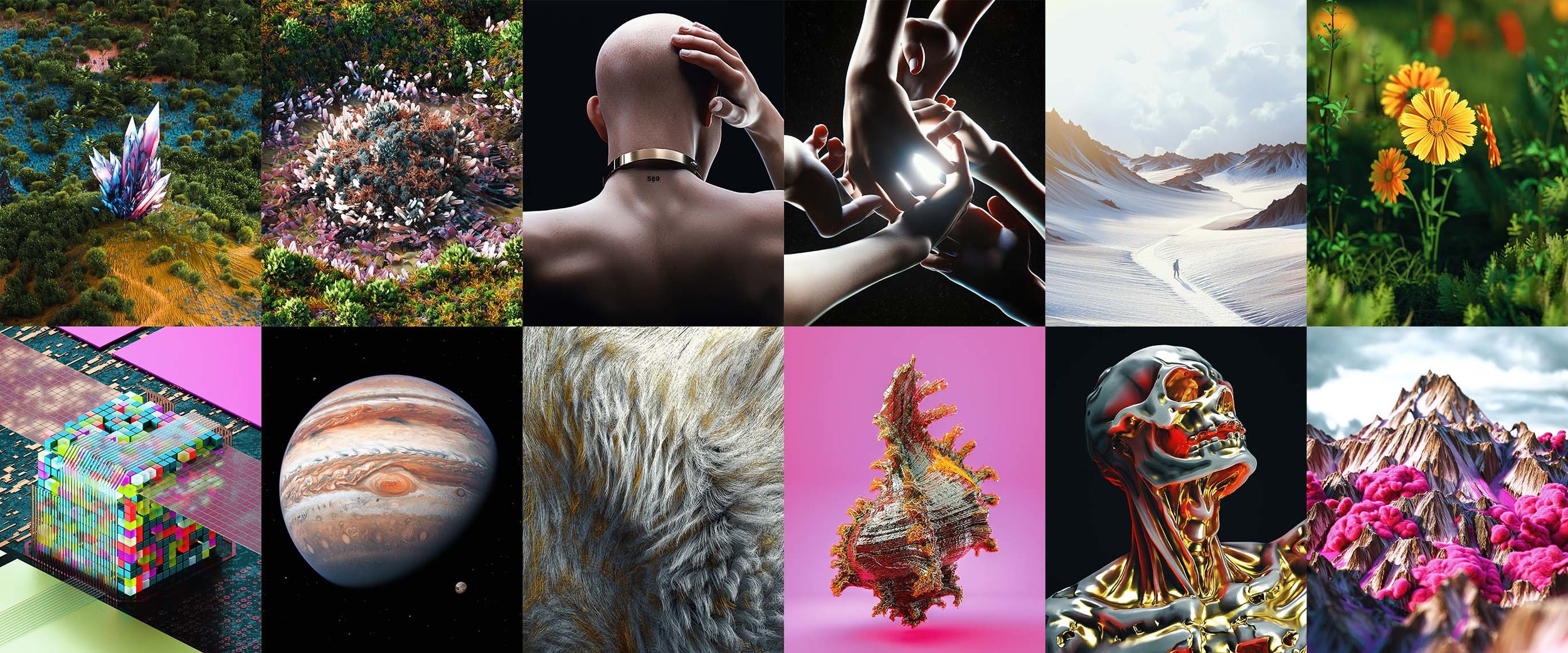
I never thought I would be using Octane so soon in my everydays journey, and definitely not 1 month after switching to Corona, I was just getting used to it, but thankfully a friend decided to gift me a full license of Octane, fan of my project files, he just wanted to give me something useful to play with in return, and I will always be thankful for his generosity.
I had just upgraded my Graphics card with a new 1050ti, and it was finally time to go full GPU.
Of course, going GPU and seeing for myself the difference in speed and in my workflow was just amazing.
Once you go GPU, you will never look back. It is probably one of the biggest leap the motion design industry had during the last couple years, a real game changer. At this point, to be honest, GPU acceleration has become a must have in most softwares, it has become essential in everyone’s workflow, and most of all, for the well-being of our own sanity.
For me personally, Octane brought me a new way of working inside of Cinema 4D with its live render view. Lighting and texturing became fun again to play with. Scattering objects, node systems, denoising renders and fog options is something most Octane users can’t go without.
I ended up doing 355 projects using Octane. As fun as it was, there was always some minor issues and frustrations I kept getting while using Octane most of the time. From the constant crashes to the minor updates, that I still don’t really understand, I just needed something more stable to work with.
Redshift Renderer
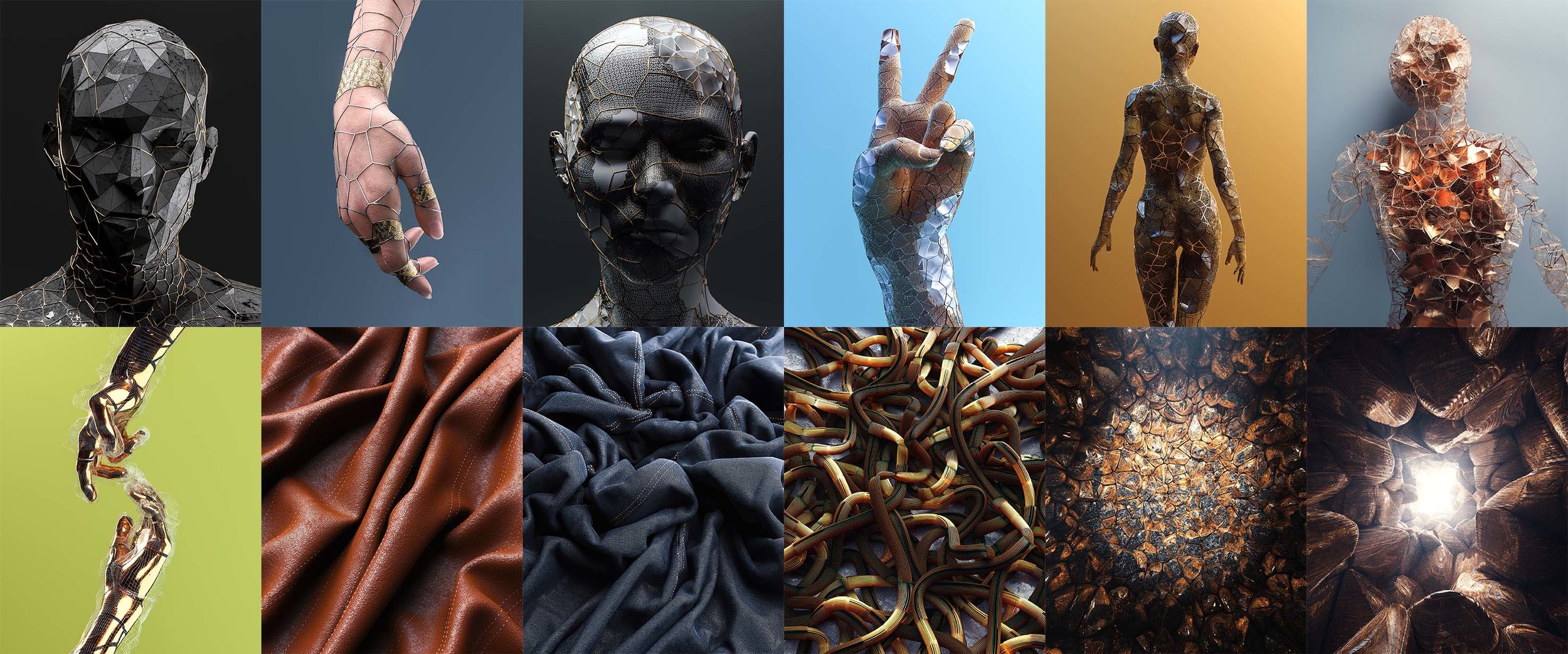
I was always intrigued by Redshift, but a bit scarred to just get into. I did however buy a full license 1 year ago, but never ended up using it until last month, when Maxon acquired Redshift. After watching some tutorials about the new node system and the overall settings. I decided to implement it in my workflow and continue my everydays project with it.
Even tho I’m still new to Redshift and still have a lot to understand, the learning curve have been fairly easy so far. I do need to state that I am very impressed by its stability inside of Cinema 4D. Over the course of a month working with it on an everyday basis, I’ve probably encounter 3-4 crashes. I used to have those same number of crashes in the same couple of minutes using Octane on a couple projects, which has made me panicky every time I was starting the render view while having a fair amount of geometry in my scene. But the stress of crashing Cinema is no more, or at least kept to a minimum while using Redshift, it just handles itself very well. And for that reason, it has now become my new render engine for my daily projects.
In retrospect
Over the last couple of years, I slowly started to understand what I was looking for in order to make my workflow easier on myself, going GPU was a real time saver, but nowadays, having a strong versatile and stable engine is something I can’t neglect.
Stability > Versatility > Speed
Cheers.